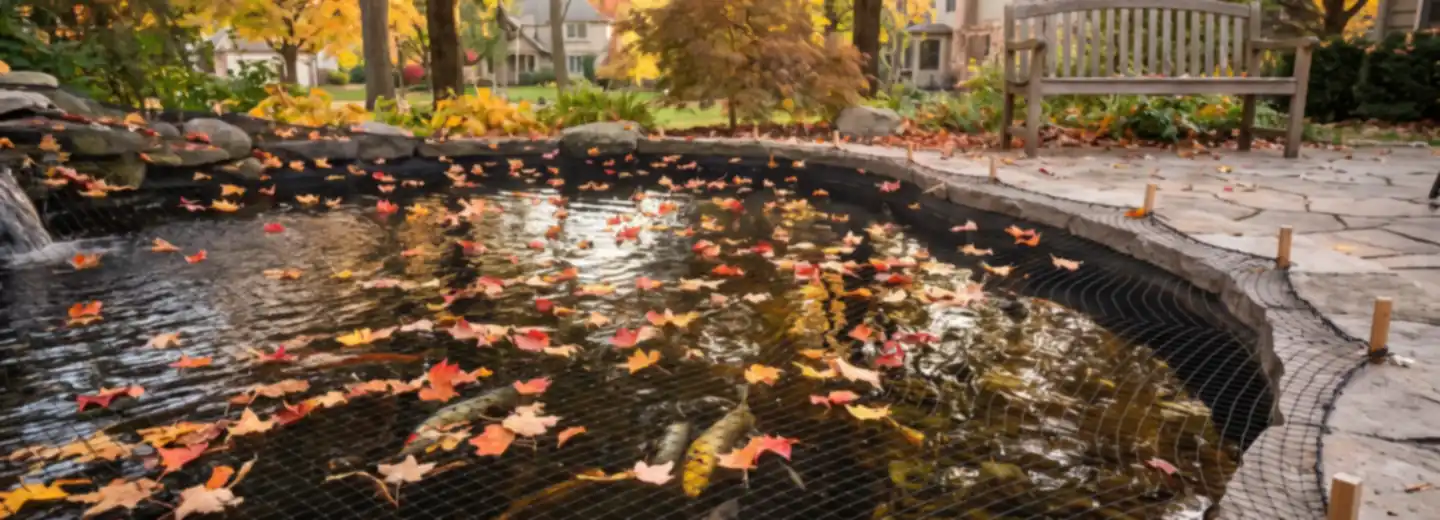
Fall pond closing and winterizing
Leaves that sink in October turn into muck and gas under the ice by January. Closing the pond properly protects the fish and the equipment through the winter.
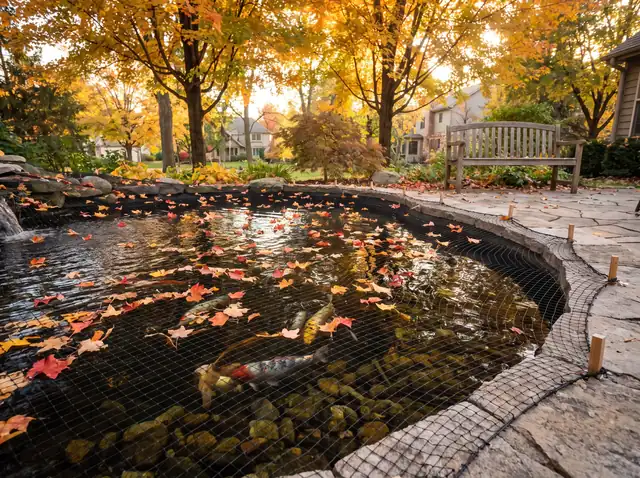
Signs it's time
- Leaves are falling into or near the pond
- Water temperature is dropping and the fish are slowing down
- You're not sure whether to keep the waterfall running all winter
- Last winter the pond froze over solid or fish were lost
What the visit usually involves
- Netting the pond before peak leaf drop, and clearing what's already in
- Trimming back and moving hardy plants; bringing tropicals in
- Shutting down the waterfall and moving the pump lower, or setting up a winter plan
- Installing a floating de-icer or aerator so gases can escape
- Storing UV clarifiers and other equipment that shouldn't freeze
Every pond and every pro is a little different. The pond professional you're matched with will explain their own process and price before any work starts.
Have this ready when you call
- Whether you have fish that stay in the pond over winter
- Pond depth at the deepest point
- Whether there's an outdoor outlet near the pond (for a de-icer)
Questions
Do I need to keep a hole in the ice?
If you have fish, a small open area is generally recommended so gases can escape. A floating de-icer or aerator is the common way to do it. Don't smash the ice, because the shock can hurt fish.
When should I stop feeding my koi?
A common rule of thumb is to cut back as the water cools and stop when it stays below about 50°F, since fish can't digest well when it's cold. Your pond pro can give you specifics for your pond.
Need fall closing?
Call now and get matched with a local pond pro.
Talk to someone about your pond
(314) 445-5517Tap to callCan't talk right now? Send the form and a local pond pro can call you back.
- Free to request, no obligation
- Your info goes only to the pond pro handling your request
- Photos help: you can text them after the call